“Why Do We Stop Dreaming Just Because We Grow Up?”

Somewhere between childhood and adulthood, many of us quietly pack away our dreams.

As children, we imagined without limits. We wanted to write books, travel the world, open bakeries, become artists, own little cottages by the sea, or simply live a life that felt meaningful and full. We believed anything was possible because no one had yet convinced us otherwise.

Then life happened.

Responsibilities arrived. Bills needed to be paid. Children needed to be raised. Careers demanded our attention. We learned to be practical, realistic, and responsible. Little by little, many of our dreams were placed on a shelf labeled “someday.”

But here’s what I’ve come to believe:

The dream never really dies.

It waits.

It waits through the busy years, the difficult years, the years when everyone else seems to need a piece of you. It waits patiently until one day you wake up and realize there is finally room in your life for you too.

Maybe your dream is to write a book or travel the world. Maybe it’s to learn to paint, start a business, take a dance class, or simply rediscover who you are when you’re not taking care of everyone else.

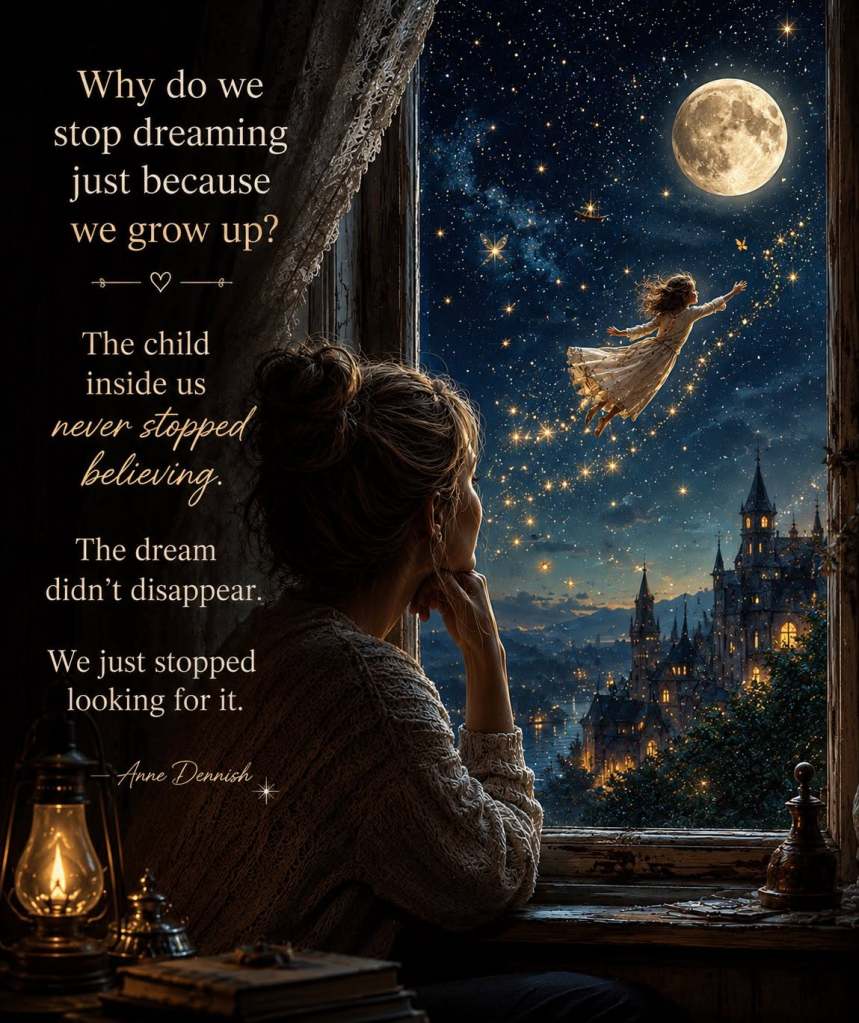
Whatever it is, age is not the reason to stop dreaming.

In many ways, growing older gives us something we didn’t have when we were young: wisdom. We know what matters and how quickly time passes. We understand that regret is often heavier than fear.

So if there’s still a dream tucked away in your heart, perhaps it’s there for a reason.

Maybe it isn’t too late.

Maybe this is the exact moment your dream has been waiting for.

After all, why should growing up mean giving up?

The child inside you is still there.

And they still believe.

Wishing you love and light,

~Anne Dennish~
“Can You Taste the Love?”

For as long as I can remember, food has been more than something we put on the table. It has been a way of bringing people together, sharing stories, and holding on to the people we love. 

Some of my favorite memories of motherhood happened in the kitchen, cooking meals for my children, gathering everyone around the table, and creating traditions that had little to do with the food itself and everything to do with the time spent together. 

When my children were little, I used to ask them a question every time I baked cookies, packed lunches, or put dinner on the table.

“Can you taste the love?”

Of course they would giggle. They were little and thought Mommy was being silly, but I would tell them the same thing every time:“I put a lot of love in that.”

Years later, they started saying it back to me and sometimes after taking a bite of dinner one of them would smile and say, “Mom, you put extra love in this today.”

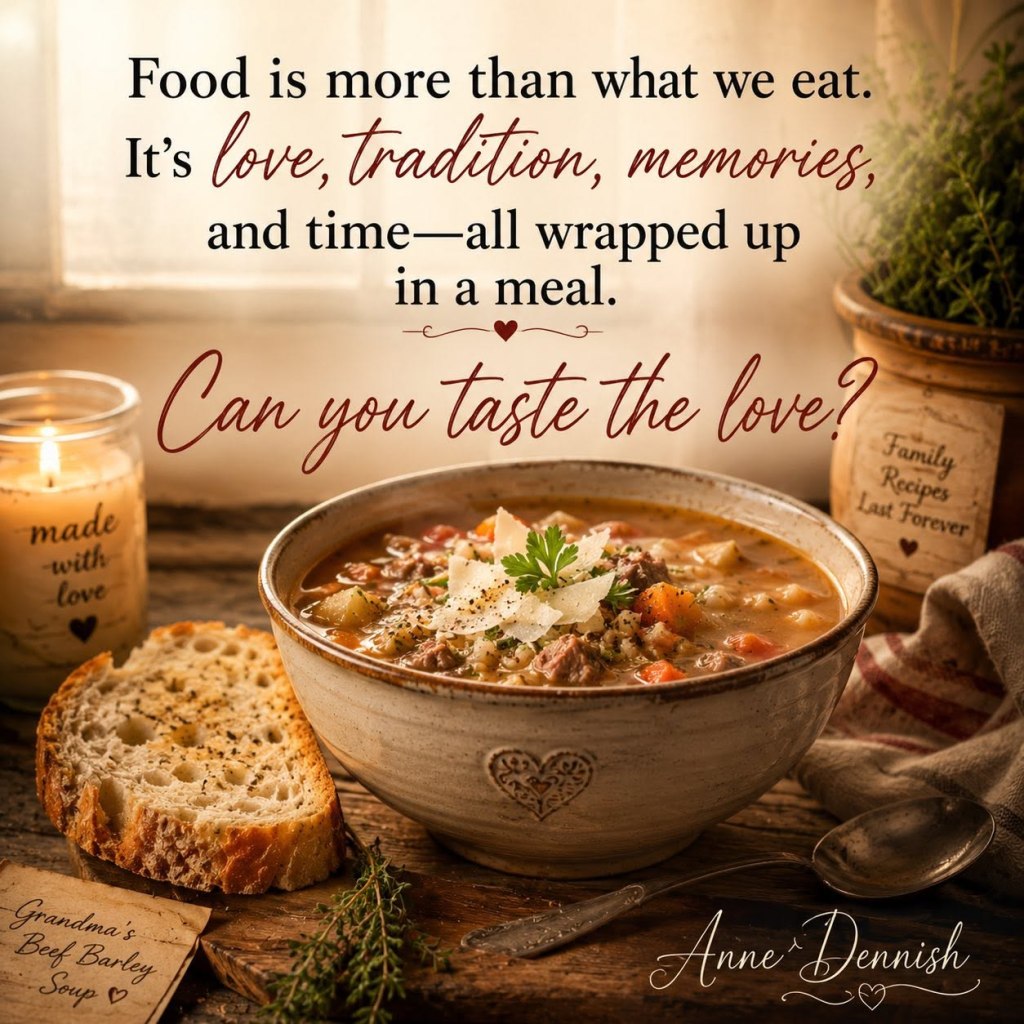
Over the years, I came to realize that recipes are really family stories written on index cards, scraps of paper, and in worn cookbooks. My grandmother’s beef, barley, and vegetable soup still reminds me of home and simpler days. In Rob’s family, Sunday gravy was passed down through generations, a tradition built on San Marzano tomatoes, garlic, basil, patience, and love. 

Food has a way of connecting generations. A recipe can outlive the person who created it. A family meal can become a treasured memory decades later. Every time I make one of those handed-down dishes, I feel connected to the people who came before me and grateful for the people who gather around my table today. 

For me, food isn’t really about cooking at all. It’s about love, memories, tradition, and time. And sometimes, the greatest ingredient in any recipe is simply the act of sharing it with someone you care about.  

I have one question for you: “Can you taste the love?”

Wishing you love and light,

~Anne Dennish~
“You Are a Survivor”

Somewhere along the way, we started labeling ourselves by what happened to us. 

The divorced woman. 

The grieving husband. 

The cancer patient. 

The abandoned child. 

The parent with an estranged son or daughter. 

The person who lost everything. 

But what if we looked at it differently? What if instead of defining ourselves by the storm, we defined ourselves by the fact that we made it through? 

Think about your life for a moment. 

Maybe you’ve buried people you loved or sat in a doctor’s office waiting for test results. 

Maybe you’ve survived a divorce, betrayal, addiction, financial hardship, loneliness, depression, or heartbreak and there were days you weren’t sure how you would make it to tomorrow. 

Yet here you are, breathing, living and reading these words. 

You survived, not because it wasn’t hard, or that it didn’t hurt and knocked to your knees. 

You survived because somehow, some way, you got back up. 

We spend so much time calling ourselves victims of our circumstances that we forget the truth: victims stay trapped in the story. 

Survivors keep writing new chapters. 

That doesn’t mean the scars disappear or the memories stop hurting. It simply means the difficult thing didn’t get the final say. 

You did. 

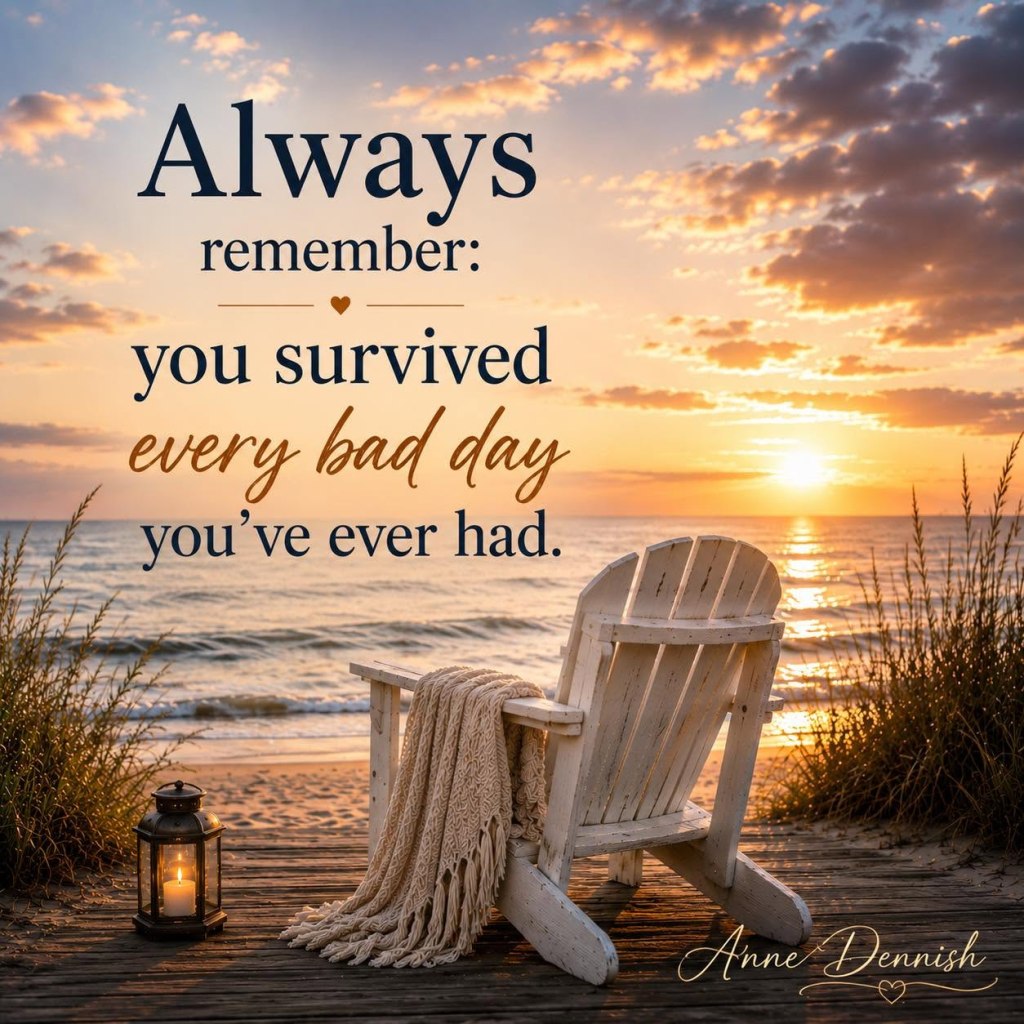
The next time you find yourself replaying everything you’ve been through, pause and ask yourself one question: ‘Am I still here?’ If the answer is yes, then congratulations. You survived 100% of your worst days. 

And that makes you something far more powerful than a victim. It makes you a survivor. 

Wishing you love and light,

~Anne Dennish~